
Most of us don’t think about our HVAC system very often. It sits quietly behind walls and ceilings, doing its job day after day. In the middle of a Texas summer, it keeps your home cool. When winter rolls in, it keeps things warm and comfortable. As long as it’s running, we assume everything is fine. But here’s the thing, while many homeowners remember to replace air filters, very few think about what’s happening deeper inside the system. Over time, dust, dirt, pet hair, pollen, and even mold can accumulate in your ductwork and HVAC components. And when your system turns on, all of that gets pushed into the air you breathe. That’s why professional HVAC cleaning services aren’t just a “nice extra.” In many homes, they’re necessary.
In Texas, especially, where air conditioners work long hours for most of the year, your HVAC system goes through a lot. Regular cleaning isn’t just about comfort, it’s about efficiency, air quality, and protecting a system that likely cost you thousands of dollars.
What Are HVAC Cleaning Services, Really?
When people hear “HVAC cleaning,” they sometimes picture someone wiping off vents or vacuuming around the registers. In reality, professional HVAC cleaning services go much deeper than that.
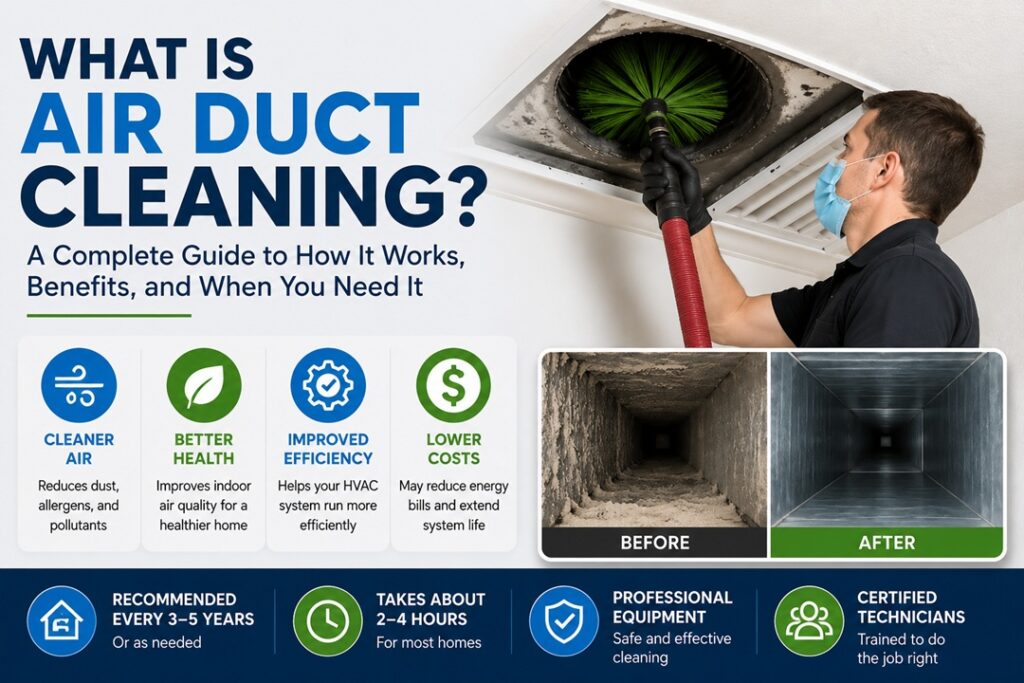
A proper cleaning involves inspecting and cleaning the internal parts of the system — including air ducts, return and supply vents, blower components, evaporator coils, and other critical parts that move air throughout your home.
These areas aren’t easy to reach. Dust and debris collect gradually, layer by layer. You won’t see it happening, but over time, it restricts airflow and forces your system to work harder.
Professional technicians use specialized tools, high-powered vacuums, rotating brushes, and compressed air equipment to remove buildup safely without damaging delicate components. The goal isn’t just to make things look clean. It’s to restore proper airflow and system performance.
When done correctly, your HVAC system runs smoother, quieter, and more efficiently.
The Air Inside Your Home Might Not Be as Clean as You Think
A lot of homeowners assume indoor air is cleaner than outdoor air. Surprisingly, that’s not always true. Modern homes are built to be energy efficient and tightly sealed. While that helps with temperature control, it also means dust and pollutants can get trapped inside. Every time your HVAC system turns on, it pulls air through the ductwork and pushes it back into your rooms. If there’s dust, pollen, or other contaminants sitting inside those ducts, they circulate again and again. Over time, you might notice more dust settling on furniture. Maybe allergies seem worse indoors. Maybe the air just feels stale.
Professional HVAC cleaning services remove the buildup that’s been hiding inside your system. Many homeowners say they notice the difference fairly quickly, less dust, fresher air, and more consistent airflow from room to room. In humid climates like Texas, moisture can also become an issue. If moisture builds up inside ductwork, it creates conditions where mold can grow. Cleaning helps address those risks before they turn into bigger problems.
The Real Benefits of HVAC Cleaning Services
One of the first things people notice after a professional cleaning is better airflow. When ducts are clogged with debris, your system struggles to push air through properly. Some rooms feel warmer, others cooler. Once that blockage is removed, airflow becomes more balanced. Another major benefit is energy efficiency. When your HVAC system has to fight through dust buildup, it uses more energy. That extra strain can show up in higher electricity bills. A cleaner system doesn’t have to work as hard, which often improves efficiency. There’s also the long-term benefit of protecting your equipment. HVAC systems aren’t cheap to repair or replace. When motors and fans constantly run under strain, wear and tear increase. Regular cleaning reduces that stress and can help extend the life of your system.
And then there’s the health factor. For households with allergies, asthma, pets, or young children, cleaner air can make a noticeable difference. Removing accumulated dust and allergens means fewer particles circulating through your living space. Even odors can improve. If you’ve ever noticed a musty smell when the air kicks on, dirty ductwork may be part of the reason.
How Do You Know It’s Time for HVAC Cleaning?
Sometimes the signs are obvious. Other times, they’re subtle. If you’re constantly dusting and it feels like the dust keeps coming back within a day or two, your ductwork could be contributing. Uneven temperatures between rooms can also indicate restricted airflow.
Strange smells coming from vents when the system runs may signal a buildup inside. And if your energy bills are creeping up without any major change in usage, reduced efficiency could be the cause. Renovations are another big trigger. Construction dust travels easily and often ends up inside ductwork. After a remodel, scheduling HVAC cleaning services is usually a smart move.
If you’ve recently moved into an older home and aren’t sure when the system was last cleaned, it’s worth considering an inspection.
How Often Should You Schedule HVAC Cleaning?
There isn’t a one-size-fits-all answer. For many homes, every two to three years is reasonable. Homes with pets may need it more often. The same goes for households with allergy sufferers.
In Texas, HVAC systems run hard for long stretches of the year. That heavy usage can lead to faster buildup. Because of that, some homeowners choose more frequent inspections just to stay ahead of potential problems. If you’re unsure, a professional evaluation can help determine whether cleaning is necessary or if your system is still in good shape.
Why DIY Isn’t the Same as Professional Cleaning
It’s completely fine to vacuum around vents and replace filters regularly. Those are good habits. But they don’t replace professional HVAC cleaning services. Most of the debris that affects performance sits deep inside the system, far beyond what a household vacuum can reach. Attempting to access internal components without proper tools can actually cause damage.
Professionals use equipment designed specifically for HVAC systems. They know how to clean sensitive components without harming them. That expertise matters. Trying to handle it without training may loosen debris but fail to fully remove it, which can make things worse.
Why It Matters Even More in Texas
Texas weather puts serious demand on HVAC systems. Long summers mean air conditioners run daily for months at a time. High humidity levels can increase the chance of moisture-related buildup inside ducts. Because of these climate conditions, maintenance becomes even more important. A well-maintained system handles extreme temperatures better and operates more efficiently year-round.
Working with experienced professionals who understand local conditions ensures your HVAC system gets the attention it actually needs.
Frequently Asked Questions(FAQs)
How long does HVAC cleaning usually take?
Most homes take between two and four hours, depending on system size and buildup.
Is it safe for my system?
Yes, when performed by trained professionals using proper equipment.
Will it really lower my energy bills?
It can improve efficiency, which may reduce energy costs over time.
How often should it be done?
Typically, every two to three years, but it depends on usage and home conditions.
Can it help with odors?
Yes, especially if odors are coming from dust or moisture buildup inside ductwork.
Conclusion
Your HVAC system works hard every day, even if you rarely think about it. Over time, buildup inside the system can affect air quality, energy efficiency, and overall performance. Professional HVAC cleaning services in Friendswood, TX, aren’t about making something look clean; they’re about helping your system run the way it was designed to.
In a climate like Texas, where heating and cooling systems rarely get a long break, regular maintenance can make a noticeable difference. If it’s been a few years since your system was inspected or cleaned, it may be worth taking a closer look. Sometimes the things we don’t see are the ones that matter most.